VIEWS | special series |
// If you've ever wondered why success is so difficult to continue, perhaps this investigation has been waiting for you too. //
-
For years, I've watched Nicki investigate a question that refused to leave her.
Not because success is difficult to achieve.
Because continued success is.
I've seen her return to the same question through brands, sport, creativity, leadership, culture, Michael Jackson, Steve Jobs, René Redzepi—and, perhaps most relentlessly, through her own work.
Whenever success arrived, she never celebrated it for long.
She investigated what had created it.
Whenever it drifted, she didn't blame luck.
She investigated what had stopped being chosen.
Over time, I realised she wasn't collecting examples.
She was searching for a principle that could survive change.
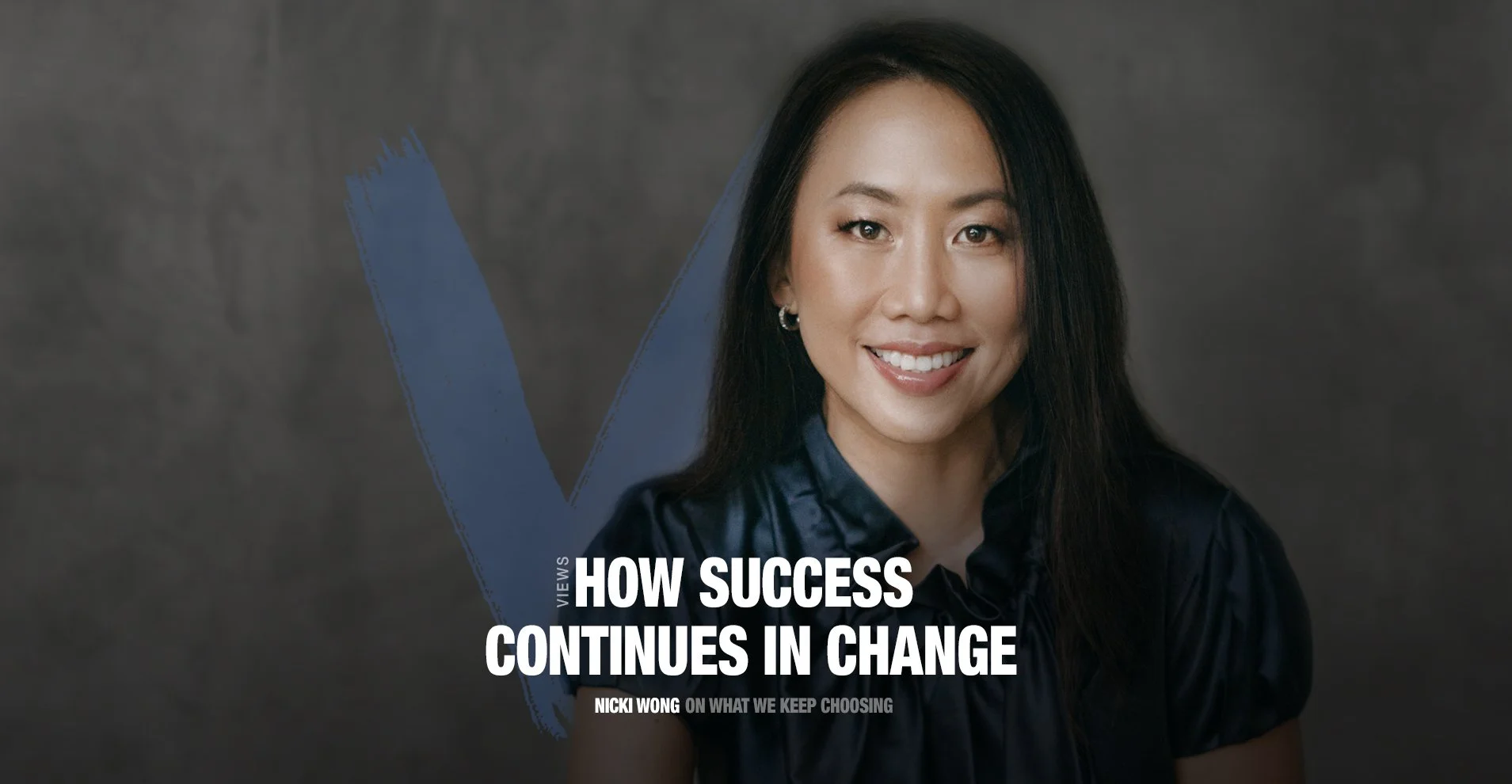
VIEWS #16 is the first time I've seen that investigation become a doctrine.
If you've ever wondered why success is so difficult to continue, perhaps this investigation has been waiting for you, too.
Organisations are investing heavily in AI-powered personalisation, creator ecosystems, community platforms, loyalty programmes, first-party data, and cultural relevance.
Yet beneath these investments sits an interesting question.
Why are organisations with unprecedented capability still searching for trust, loyalty, advocacy, and community?
We have never known more about customers.
Never possessed more data.
Never had more ways to reach people.
Yet continued success remains difficult to sustain.
If better capabilities were designed to create these outcomes, shouldn't the problem already be solved?
The irony is clear.
The things becoming easier to build are not the things people are struggling to achieve.
People are not struggling to produce content.
They are struggling to create meaning.
People are not struggling to reach others.
They are struggling to matter to others.
Over the years, I have noticed a pattern.
Talent.
Skill.
Experience.
Expertise.
Technology.
Strategy.
They have become abundant.
Success is increasingly achievable.
Continued success remains remarkably rare.
Why?
What creates continued success?
To understand this, I asked the same question across three very different fields.
Michael Jackson
Music trends have changed.
New artists continue to emerge.
New platforms have reshaped how music is consumed.
Yet decades later, people continue to be drawn to his work.
Why?
Apple
Competitors match features.
Technology continues to evolve.
User expectations continue to rise.
Simplicity and seamlessness are no longer Apple's alone.
Yet millions continue identifying with Apple despite abundant alternatives.
Why?
Chef René Redzepi of Noma
New concepts and restaurants continue to redefine cuisine.
Craftsmanship has become increasingly exceptional.
Diners have become increasingly sophisticated and harder to surprise.
Yet people continue travelling to Copenhagen, lining up months in advance to experience Noma's latest creation.
Why?
Three different fields.
Three different talents.
Three different masteries.
One common outcome.
Continued success.
What creates it?
I found a clear, consistent chosen behaviour.
Beyond talent.
Beyond skill.
Beyond technology.
Beyond capability.
Care.
Care that created their first success.
The same care that creates repeat reasons for people to keep coming or coming back.
People do not keep coming to Michael Jackson for his music.
They keep coming to feel what he chooses to care about.
People do not keep choosing Apple for its great built-in technology.
They keep coming to experience what Apple chooses to care about.
People do not keep travelling to Noma for its exceptional concept and food.
They keep coming to enjoy the discovery of taste that René chooses to care about.
That was the pattern.
Their expressions evolve.
Their outputs change.
Their care remains unchanged.
Over time.
Continuity of care is what people return to.
Not the performance alone.
Not the product alone.
Not the menu alone.
The care behind them.
Care is a decision of choice.
What is worthy to serve?
What is worthy of protection?
What is worthy of continuing?
That choice does not remain isolated.
One individual expresses it throughout the organisation.
In every decision.
In every priority.
In every refinement.
What must be removed?
What must be repeated?
What must continue to be served?
Over time, care becomes a promise.
Not just a message.
Not just positioning.
But a consistent commitment to care.
When people recognise that what an organisation chooses to care about aligns with what they themselves care about, something subtle happens.
They begin to participate.
Not because they are asked to.
But because they recognise alignment.
That participation builds over time.
Repeated choice becomes familiarity.
Familiarity becomes relationships.
Relationships become trust.
Trust becomes loyalty.
Loyalty becomes advocacy.
Advocacy becomes a continued success.
Care does not remain where it begins.
It moves.
It evolves.
It is re-chosen by others through experience.
That is why it is transferable.
Because it is repeatedly recognised and chosen again.
Continued success is fragile.
Not because capability disappears.
Because care can drift.
The moment when people once felt is no longer consistently cared for, something begins to change.
Not immediately.
Quietly.
Trust drifts.
Loyalty drifts.
Advocacy drifts.
Belonging drifts.
Eventually, people drift.
Only then do the numbers follow.
This may explain why continued success often appears unpredictable.
The business may still possess the same capability.
The same technology.
The same strategy.
The same talent.
Yet people no longer feel the same reason to return.
The drift begins long before the metrics reveal it.
Perhaps this is why care has been misunderstood for so long.
It has often been classified as a virtue.
Something personal.
Something admirable.
Something intangible.
Something nice to have.
Yet throughout this investigation, it kept producing remarkably commercial outcomes.
Trust.
Loyalty.
Advocacy.
Belonging.
Participation.
Continued success.
How can something so commercially consequential be treated as something commercially optional?
Perhaps we have been looking at care through the wrong lens.
Care is not simply kindness.
It is not merely compassion.
It is not a personality trait.
Care is a commercial skill.
A learnable skill.
A strategic skill.
A mastery skill.
Because every wave of success presents a new choice.
What will you continue choosing to care about?
How faithfully will your customers continue to care about what you care about?
Capability creates success.
Care determines whether people continue choosing you.
This brings us back to the question we began with.
Organisations continue investing in better capabilities.
Better technology.
Better personalisation.
Better data.
Better targeting.
Better reach.
These investments matter.
They create opportunities.
They create efficiency.
They create scale.
But they cannot choose what is worth caring about.
Only people can.
Technology can amplify how your care is felt.
It cannot choose your care for you.
When people recognise that what you continue choosing to care about aligns with what they themselves care about, something remarkable happens.
Trust deepens.
Loyalty strengthens.
Advocacy grows.
Communities form.
People do not simply return.
They bring others with them.
Perhaps the next competitive advantage is not capability alone.
Perhaps it is mastering what your capability continues choosing to serve.
Care is mastery.
It begins with a choice.
And it continues as a choice.
If you inherit a company,
know what you have inherited to care about.
If you lead a company,
know what you must continue choosing to care about.
If you build a brand,
know what you are asking others to care about.
Because people do not continue choosing you simply because of what you make.
They continue choosing what you continue choosing to care about.
Care is felt.
Technology can amplify how your care is felt.
But only you can choose it.
Every wave of change will ask the same question.
Will you continue choosing what made people choose you in the first place?
Capability creates success.
Care creates continued success.
| FULL SERIES |
How Success Continues In Change
How Success Quietly Misaligns Mastery
Chef René Redzeoi of Noma On Personal Mastery
Michael Jackson On Brand Mastery
Apple on Leadership Mastery